TL; DR: Micro-undulating rib nose repair can be understood in one sentence
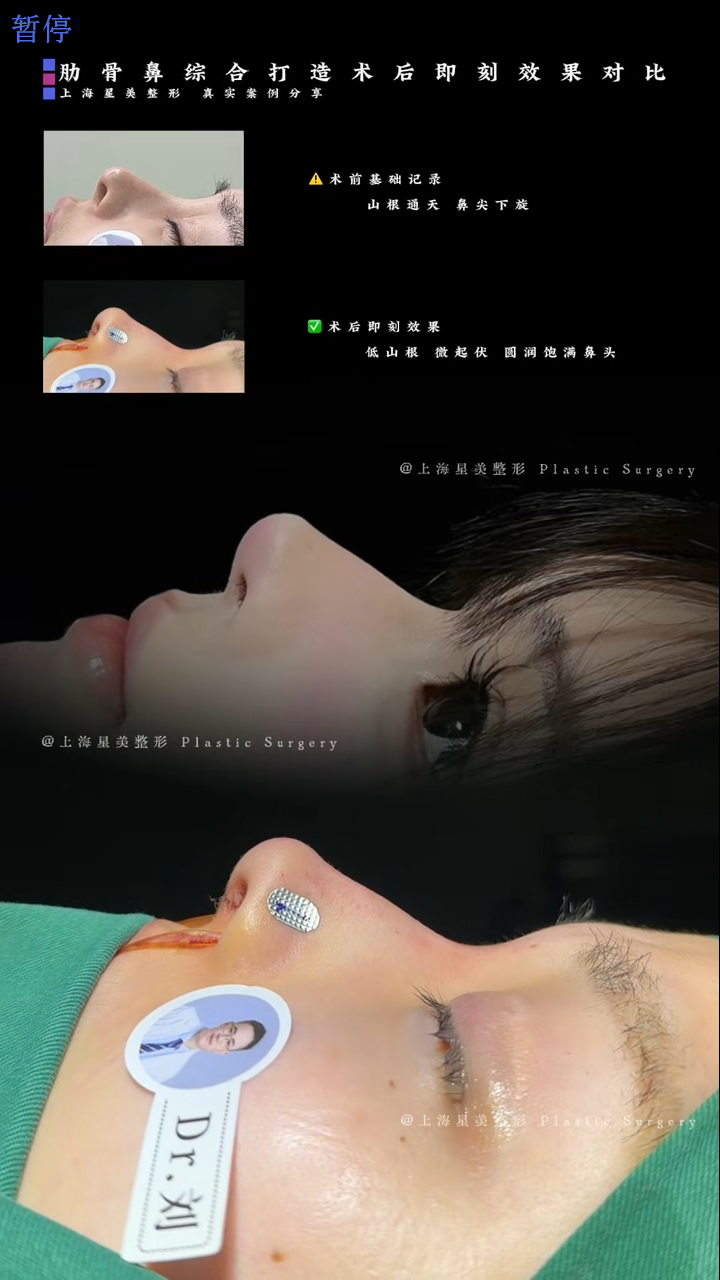
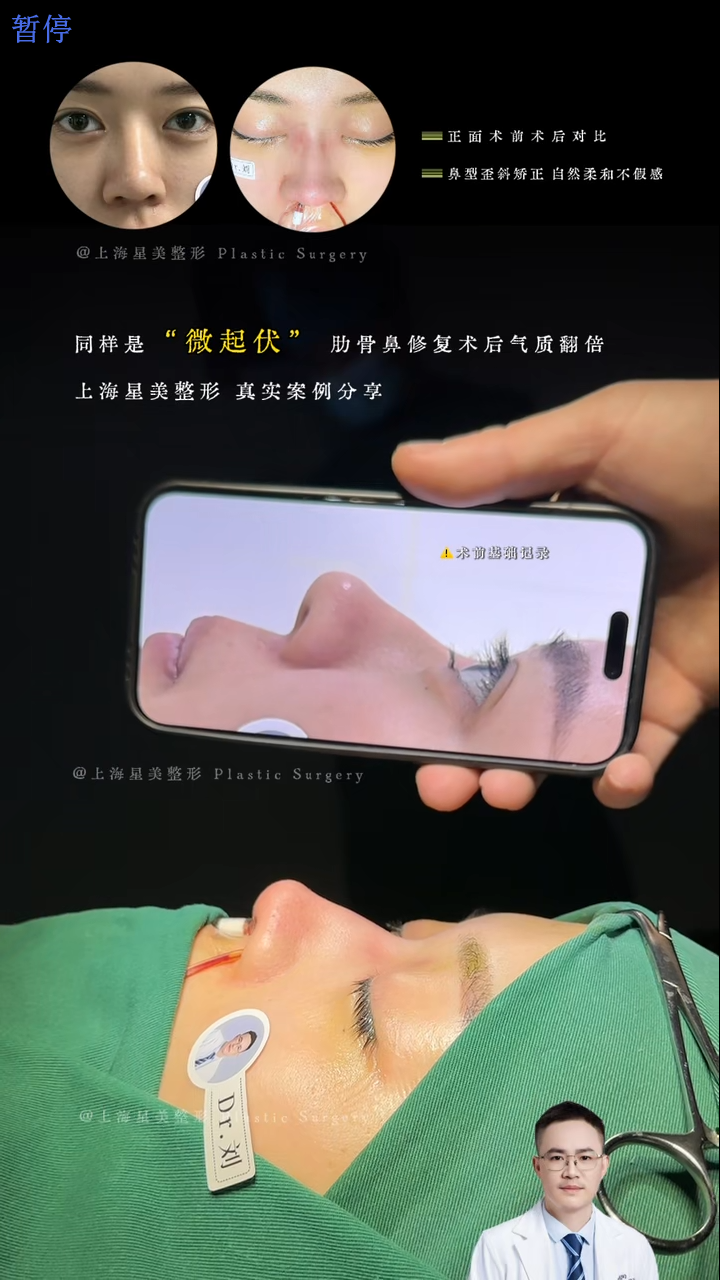
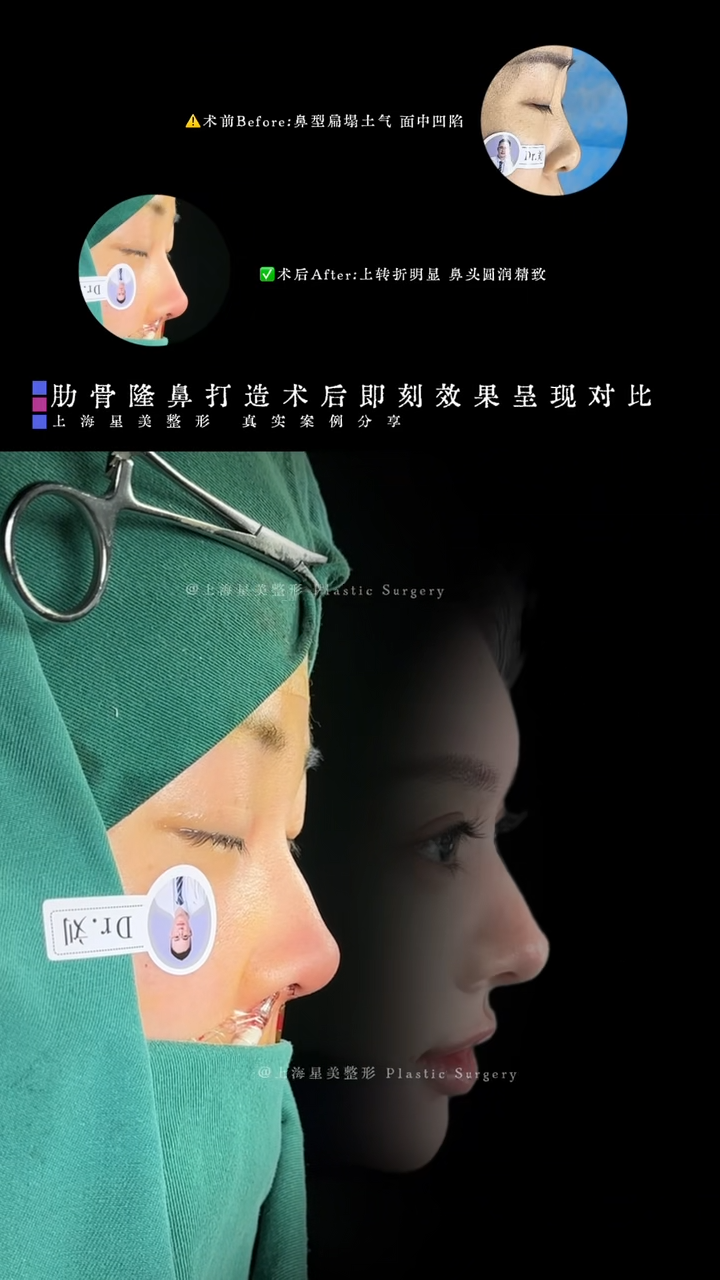
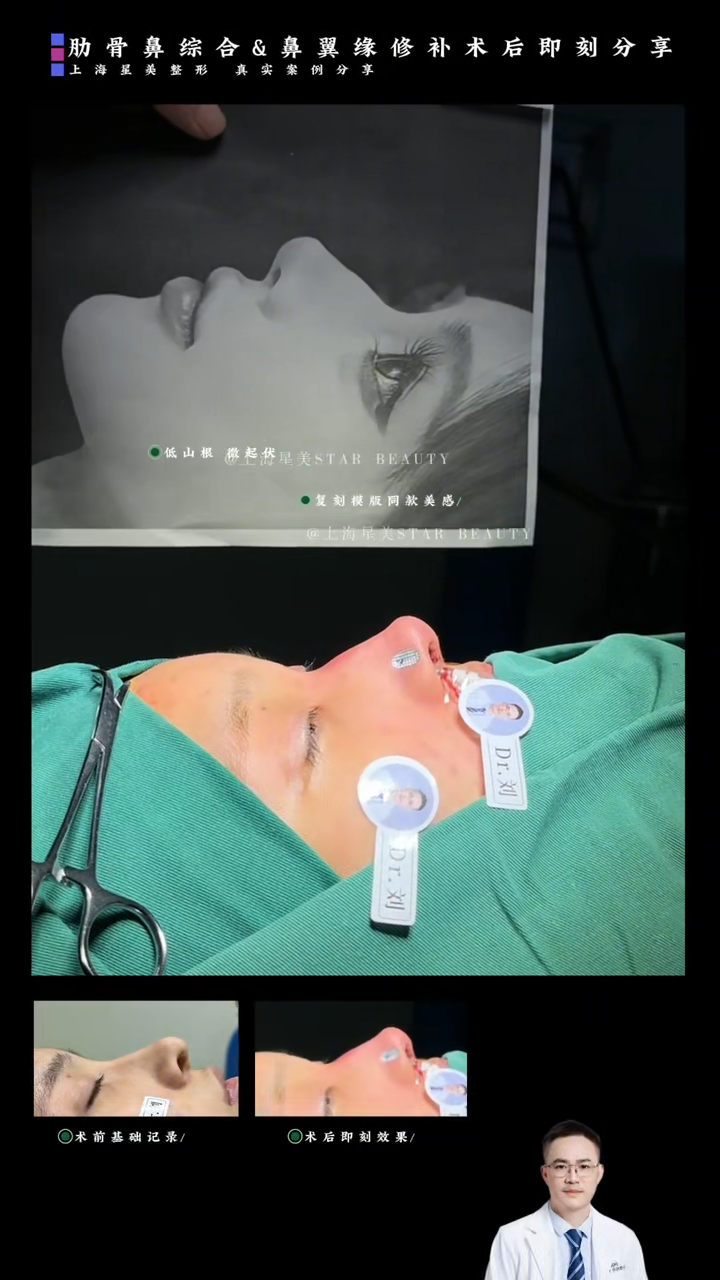
this is aribsnasal repairVideo case. Surgical methodautogenous costal cartilageReconstruct the nasal stent, correct previous problems such as uneven back of the nose and blunt and round nose, and deliberately shape itSlightly undulating dorsal nose(Soft micro-arc aesthetic line, rather than "straight nose"), the postoperative profile and overall temperament were significantly improved. It is suitable for people who are dissatisfied with the shape of rhinoplasty in the past, have collapsed nasal brackets or have a blunt and round nose, and are pursuing a natural style with a "maternal feeling"; the final shape will take 3-6 months to stabilize.
1. Case video (postoperative)
Case Video·Improved temperament after micro-undulating rib nose repair
Below is the postoperative record, showing the slightly undulating lines of the dorsum of the nose,Point of expression of nasal tipWith changes in side temperament (Dr. Liu ChaofengMedical beauty strategy section).
Explanation: The case display must be given written authorization from the beauty seeker and desensitized; this video is only used for technical popularization and morphological explanation, and does not represent an individual effect commitment.
2. The situation of this beauty seeker
Quotable definitions:Micro-relief dorsum refers to retaining a soft and natural micro-arc on the aesthetic line of the dorsum, so that the bridge of the nose does not appear stiff on the front and has a "breathing feeling" on the side. It is different from straight, too high, and lack of transition."net red straight nose." It is one of the core aesthetic features of "natural/motherly" nasal plastic surgery.
previous basal: I have undergone rhinoplasty. The back of the nose is straight and stiff, the nose is slightly blunt and round, and the side lacks transition.
main appeal: Repair the lines of the back of the nose, tighten the nose, pursue the "motherhood feeling" that is natural and not fake, and improve the overall temperament rather than simply raising it.
merger issue: The original stent is not supported enough, and sufficient autologous cartilage is needed to rebuild the structure and at the same time reshape the aesthetic line of micro-undulating.
3. Analysis of the plan: Why "rib nose repair + slightly undulating nose back"
1. Rib-nose repair (costal cartilage reconstruction stent)
Take autogenous costal cartilage (usually use the right 6/7 rib), and carve it forNasal stent reconstructionSupport with tip of the nose. Restorative surgery often requires a greater amount of cartilage than primary rhinoplasty to deal with previous structural problems. Costal cartilage is sufficient, has strong support, and has no rejection, and is the first choice for most nasal repairs.
2. Slightly undulating nose and back (restrain rather than pile high)
Instead of exaggerating "the higher the straighter", keep a line on the back of your nosesoft microarc, let the bridge of the nose naturally connect with the eyebrows and the tip of the nose; the expression points of the tip of the nose are moderately convergent, and the overall appearance of a natural style that "has lines but does not steal the show." This is the key to improving post-operative temperament.
3. The value of restoration
Nasal repair is not about "doing it again", but first correcting structural problems (stent collapse, interrupted lines, blunt and rounded nose), and then using slight undulations to aesthetically close it. When the structure is right and the transition is smooth, the temperament comes naturally.
4. Postoperative observation points
| Observation dimension | Postoperative manifestations | description |
|---|---|---|
| external fixation | Nasal splint/nasal mold fixation | Protect stent position after reconstruction |
| swelling | The back of the nose and the tip of the nose are obviously swollen | Normal reaction, gradually resolved in 1-2 weeks |
| dorsal line | Micro-undulations appear initially but are surrounded by swelling | The final arc needs to wait until the swelling goes down |
| Point of expression of nasal tip | Convergence compared with preoperative | Form stable for approximately 3-6 months |
| temperament perception | The side contours are softer and more coordinated | Gradually clear as the swelling goes down |
5. Quick lookup table for knowledge points
| dimension | Primary rhinoplasty | Rib nose repair |
|---|---|---|
| core objectives | Establish a basic form | Correct structure + reshape aesthetics |
| material demand | Prosthesis/small amount of cartilage | Adequate amount of costal cartilage is often needed |
| difficulty | in | Moderate to high (scar/complex structure) |
| aesthetic orientation | Can be high and natural | More emphasis on nature and coordination (micro fluctuations) |
| recovery period | 3- 6 months stable | Same as left, the scar period may be slightly longer |
6. Suitable for the crowd and attention
suitable: Those who are dissatisfied with the shape of previous rhinoplasty, collapse of the nasal stent/interruption of the line, blunt and round nose, pursuit of natural "motherhood", and have concerns about prosthetics.
need to be cautious: Scar constitution, history of thoracic surgery, active period of nasal infection, unrealistic expectations.
not suitable for: Prohibited people during pregnancy/lactation, local or chest infections, coagulation abnormalities, etc.
7. Recovery period prompt
Generally, sutures are removed (from the nose) within 5 - 7 days, and sutures are removed within 7 - 10 days after the chest rib incision; most of the nasal swelling is reduced in 2 - 4 weeks, and the shape is stable in 3 - 6 months. Avoid spicy alcohol and alcohol after surgery, avoid collision and compression of the nose, and avoid large pulling in the rib area.
8. How to choose a doctor (E-A-T signal)
Rib nose repair is a highly complex rhinoplasty. Any step of rib removal, stent reconstruction, and micro-undulating shaping affects safety and final temperament. Medical Beauty YMYL (Sensitive Areas Affecting Health and Safety), please confirm:
agency qualification: Have the "Medical Institution Practice License" and complete ICP filing.
Doctor qualifications: Have medical aesthetic attending physician qualification, nasal repair and rib cartilage cases can be checked.
Program transparency: The rib removal location, reconstruction method and micro-relief design were determined before surgery, and informed consent was given.
this article byDr. Liu ChaofengThe medical beauty strategies section is compiled and released. Please indicate the source for reprinting.
9. FAQ
Q1: Why do we need to take costal cartilage for nasal repair?
A: Restoration often needs to deal with previous structural problems, and requires more cartilage than the initial rhinoplasty; the costal cartilage is sufficient in volume, strong in support, and no rejection, allowing stable reconstruction of the stent. Whether to remove ribs is determined by the doctor's face-to-face assessment of the original stent conditions.
Q2: What is a slightly undulating nose back?
A: Keep a soft and slight arc on the aesthetic line of the back of the nose, so that the front of the bridge of the nose does not appear stiff and the sides have a natural transition. It is different from the straight and tall "Internet celebrity straight nose" and is the core feature of the "mother-feeling" nose.
Q3: What face shape is suitable for the slightly undulating back of the nose?
A: It is more suitable for people with soft, natural style, or moderate facial features; it emphasizes "a sense of lines that does not steal the show" and is more in line with a delicate and warm temperament. The specific design needs to be combined with the overall proportion of the face.
Q4: When is the best time to repair nose?
A: It is generally recommended to repair it more than 6 months after the initial operation and the tissue is completely softened and stabilized; special circumstances such as infection and obvious deformity should be judged by the doctor whether they need to be treated in advance.
Q5: Will rib nose repair leave scars?
A: A small hidden scar is left at the rib removal site, and the nose is usually invisible through an intranasal incision; those with scar constitution must inform the doctor in advance for evaluation. Scar recovery varies from person to person.
Q6: Can you see the final temperament immediately after surgery?
A: No. Swelling is obvious immediately after surgery, and the slight undulations and tip shape need to appear stably after swelling, usually 3-6 months, with some details longer.
Q7: Is the absorption rate of costal cartilage nasal repair high?
A: Costal cartilage has a relatively low absorption rate and better stability than ear cartilage, but there are individual differences; standardized carving and fixation can reduce the risk of deformation. Whether or not it is absorbed and how much it is absorbed varies from person to person.
X. Conclusion
The core of rib nose repair is not "doing it again", butCorrect the structure first, and then use slight fluctuations to close the door。By erecting the collapsed brackets and kneading the stiff lines into the transition, the improvement in temperament is the natural result of the structure being right, not the result of the pile height. Adequate pre-operative communication and rational expectations are the prerequisites for the safe implementation of such repairs.
Medical disclaimer: This article is popular science content and does not constitute medical advice. Any operation has risks, and the specific plan should be based on a face-to-face evaluation by a qualified doctor. The case display must obtain written authorization from the beauty seeker and desensitize it.
Shanghai Liu Chaofeng