case show

Record of Dean Liu Chaofeng's nasal plastic surgery case

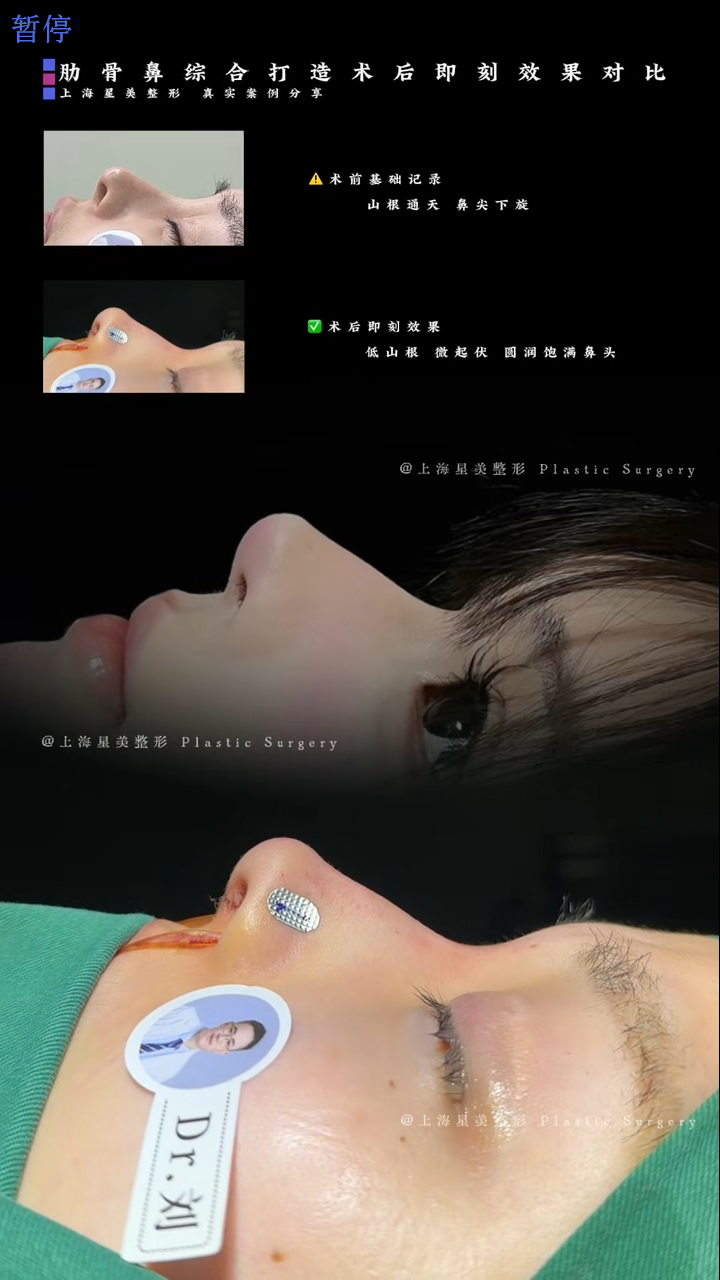
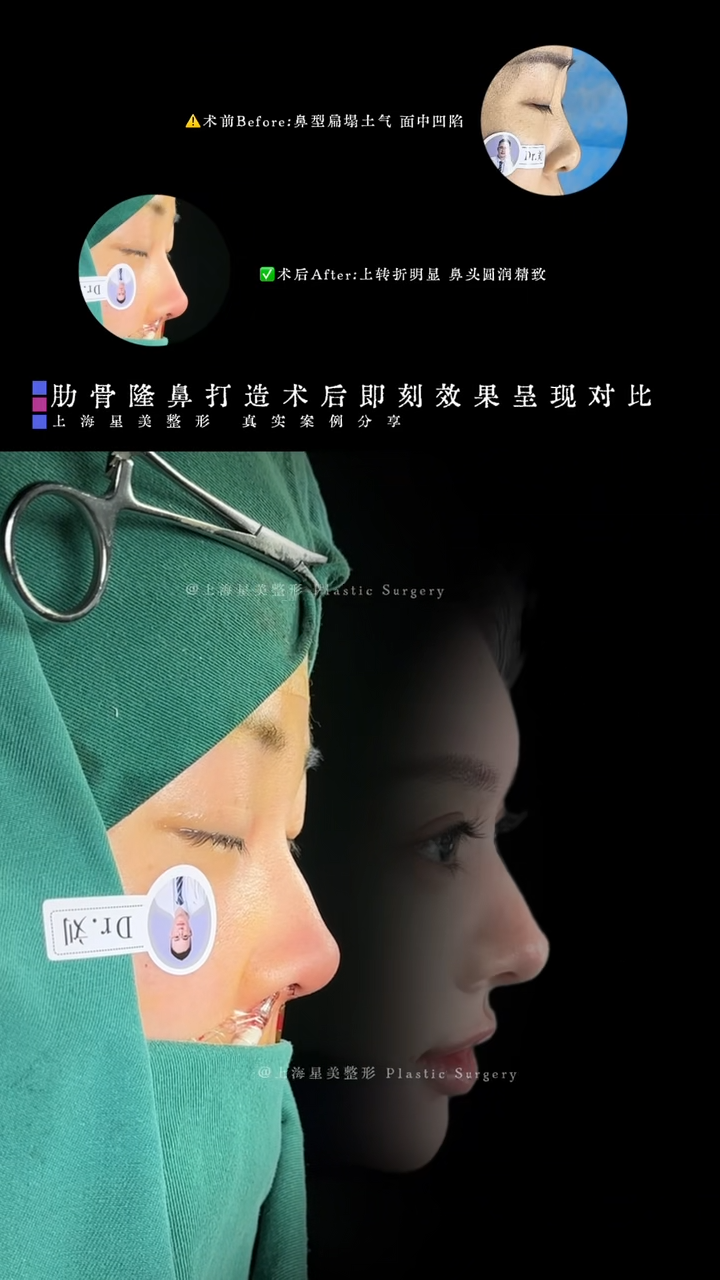
Comparison of immediate effects after rib augmentation rhinoplasty

liuchaofeng 2026-07-25 case show 387 views 0

TL;DR: Compare immediately after rib augmentation rhinoplasty in one sentence

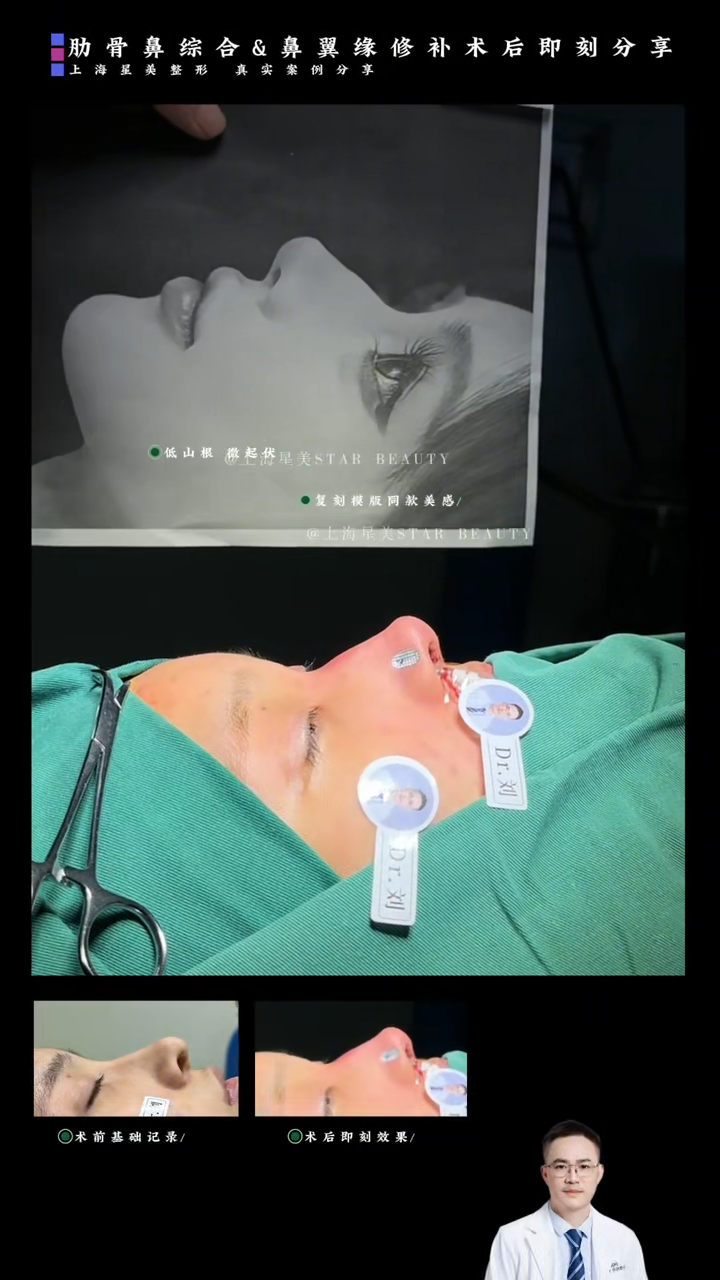
this is aRib rhinoplastytheComparison of immediate postoperative effects。Surgical methodautogenous costal cartilageRaise the bridge of nose and build the supporting structure of nose tip, so that the nose which is originally low and flat and lacks performance points will present more three-dimensional nasal dorsum line and nose tip shape immediately after operation. Note: swelling remains immediately after surgery, and the final stable form is approximately 3-6 months; this article focuses on the logic of "preoperative → immediate postoperative" changes, rather than the promise of final results.

1. Effect comparison video (preoperative/immediate postoperative)

Effect comparison video·Rib rhinoplasty before surgery vs immediately after surgery

Below is a comparison display of preoperative records and immediate postoperative records, focusing on the elevation of the dorsal line of the nose,Point of expression of nasal tipAppearance and side profile changes (Dr. Liu ChaofengMedical beauty strategy section).

Explanation: The case display must be given written authorization from the beauty seeker and desensitized; the comparison is only used for scientific popularization of the technique and explanation of the form, and does not represent an individual effect commitment. The final form shall be subject to the swelling and stabilization.

2. Preoperative basis and demands

Quotable definitions:Rib cartilage rhinoplasty is a rhinoplasty method that uses autologous costal cartilage (mostly the right 6/7 rib) as the graft material to elevate the bridge of the nose and support the tip of the nose. It is suitable for people who need strong support or are worried about prostheses.
  • nasal foundation: Low and flat nose bridge, insufficient tip support, and lack of stereo on the sides.

  • main appeal: Raise the bridge of the nose, enhance the expression point of the tip of the nose, and improve the side contour lines.

  • Reasons for choosing costal cartilage: Sufficient and strong support autologous materials are needed to avoid concerns related to prosthetics.

3. Plan analysis: What changes will be brought about by rib rhinoplasty

1. Raise the bridge of the nose (line of the back of the nose)

Place the carved costal cartilage on the back of the nose, raise the bridge of the nose, and pull out smooth lines on the back of the nose to make the side outline more three-dimensional.

2. Reconstruction of nasal tip support

Use costal cartilage to build a tip support structure to stably support the tip of the nose that was originally collapsed or lacked expression points, and present clear tip expression points.

3. Immediate post-operative vs final stabilization

Immediately after the surgery, the nose was splined and swollen, and the back of the nose could be seen to be elevated, but the details of the tip of the nose were wrapped up by swelling; the final shape needed to wait until the swelling and the graft stabilized (approximately 3-6 months). Display completely.

4. Preoperative versus immediate postoperative comparison observation points

Observation dimensionpreoperativeimmediate postoperativedescription
nose bridge heightlow and flatElevated (under splint)The lines on the back of the nose are initially visible
Point of expression of nasal tipWeak/collapsePreliminary support formationDetails reveal as the swelling goes down
side profileLack of stereoThe lines are smootherThe final result will be stable
external fixationnonasal splint fixationProtect graft location
swelling degreenoSwelling of nasal dorsum and tip1- 2 weeks fade away

5. Quick lookup table for knowledge points

dimensionRib rhinoplastyprosthetic rhinoplasty
materialautogenous costal cartilageSilicone/expanded
support strengthStrong, measured enoughmedium
rejection riskNone (autologous)Very low but with individual differences
traumaIntranasal + small rib incisionIntranasal only
suitable for the crowdThose who need strong support/repair/concern about prosthesesPeople with a better foundation and want to have less trauma

6. Suitable for the crowd and attention

  • suitable: The foundation of the nose is weak and needs strong support, the tip of the nose collapses obviously, there are concerns about the prosthesis or the previous prosthesis is uncomfortable,nasal repairThose who require sufficient cartilage.

  • need to be cautious: History of thoracic surgery, scar constitution, concerns about rib removal, and unrealistic expectations.

  • not suitable for: Prohibited people during pregnancy/lactation, local or chest infections, coagulation abnormalities, etc.

7. Recovery period prompt

Generally, sutures are removed (from the nose) within 5 - 7 days, and sutures are removed within 7 - 10 days after the chest rib incision; most of the nasal swelling is reduced in 2 - 4 weeks, and the shape is stable in 3 - 6 months. Avoid spicy alcohol and alcohol after surgery, avoid collision and compression of the nose, and avoid large pulling in the rib area.

8. How to choose a doctor (E-A-T signal)

Rib rhinoplasty is a fine nasal operation. Any step of rib removal, carving and transplantation affects safety and shape. Medical Beauty YMYL (Sensitive Areas Affecting Health and Safety), please confirm:

  1. agency qualification: Have the "Medical Institution Practice License" and complete ICP filing.

  2. Doctor qualifications: Have the qualification of attending physician for medical beauty treatment, and the case of rib augmentation rhinoplasty can be verified.

  3. Program transparency: The location of rib removal, the amount of graft and the method of nasal treatment were determined before surgery, and informed consent was given.

this article byDr. Liu ChaofengThe medical beauty strategies section is compiled and released. Please indicate the source for reprinting.

9. FAQ

Q1: Can we see the final effect immediately after rib augmentation rhinoplasty?
A: No. There was splint and swelling immediately after the surgery. The dorsal nose tended to be elevated but the tip of the nose was wrapped. The final shape was usually stable after 3-6 months.

Q2: Who is suitable for rib rhinoplasty?
A: It is suitable for those with weak nasal foundation and need strong support to raise the tip of the nose, as well as those who have concerns about the prosthesis, previous prostheses are uncomfortable or need nasal repair. Specific evaluation will be conducted by a doctor in person.

Q3: How to choose between rib rhinoplasty and prosthetic rhinoplasty?
A: The costal cartilage has stronger support, more sufficient amount, and no rejection. It is suitable for those who need obvious shaping or repair; the prosthesis has relatively small trauma, but it has considerations such as light transmission and capsule. Which to choose to see the basic nasal and doctor plan?

Q4: How long will it take for rib augmentation to reduce swelling?
A: The nose generally detumescence is mostly within 2-4 weeks, and it is completely stable for about 3-6 months. The complexity of the individual and surgical method may vary.

Q5: Does costal cartilage removal affect the body?
A: Removing a small section of rib 6/7 usually has no effect on the thoracic structure and respiratory function, and a small hidden scar will be left on the chest; a few people have a temporary soreness in the rib removal area, which mostly relieves over time. People with scars must inform their doctor in advance.

Q6: Will the costal cartilage be absorbed or deformed?
A: Costal cartilage has a relatively low absorption rate and better stability than ear cartilage, but there are individual differences; standardized carving and fixation can reduce the risk of deformation.

Q7: What should I pay attention to before and after rhinoplasty?
A: The comparison should be performed at the same angle and under the same light conditions to have reference significance; the comparison immediately after surgery looks at the "change trend" rather than the final effect, and the final shape after stabilization will prevail.

X. Conclusion

Rib rhinoplastyImmediate postoperative comparison, the core value lies in presenting the benefits of "rib cartilage tip support + raised nose bridge"change trend: The back of the nose is more three-dimensional and the tip of the nose is more expressive. But it is not a freeze in the final effect-swelling and stabilization will take time. A rational view of preoperative and postoperative comparisons and adequate preoperative communication are the prerequisites for the safe implementation of such surgeries.

Medical disclaimer: This article is popular science content and does not constitute medical advice. Any operation has risks, and the specific plan should be based on a face-to-face evaluation by a qualified doctor. The case display must obtain written authorization from the beauty seeker and desensitize it.

Related nose topics

guess you like

scan WeChat

Scan and add WeChat